Which Foundation Cracks Matter
Every house has cracks. The question is which ones are telling you something. San Antonio Foundation Fix explains what direction, width and location say about a San Antonio foundation.
- Upfront Quotes
- Slab & Pier and Beam
- Residential & Commercial
By the San Antonio Foundation Fix team · Updated September 2026
Three Things to Look At
Before worrying about any single crack, get three pieces of information: which way it runs, how wide it is, and whether it is changing. Those three between them answer most questions, and none of them require any expertise to collect.
Direction tells you what force made it. Width gives a rough sense of how much movement has happened. Change over time is the one that decides whether you have an active problem or a historic one, and it is the reason to photograph cracks with a date rather than just look at them.
Hairline Cracks in Drywall
Fine cracks in the middle of a wall, along a ceiling joint or where two sheets of drywall meet are usually shrinkage and settlement in the finishes, not the foundation. Texas houses do this in their first couple of years and then again whenever humidity swings hard.
They matter more when several appear at once in the same area, or when one of them keeps reopening after being filled. A crack that will not stay patched is a crack that is still moving.
Diagonal Cracks From Door and Window Corners
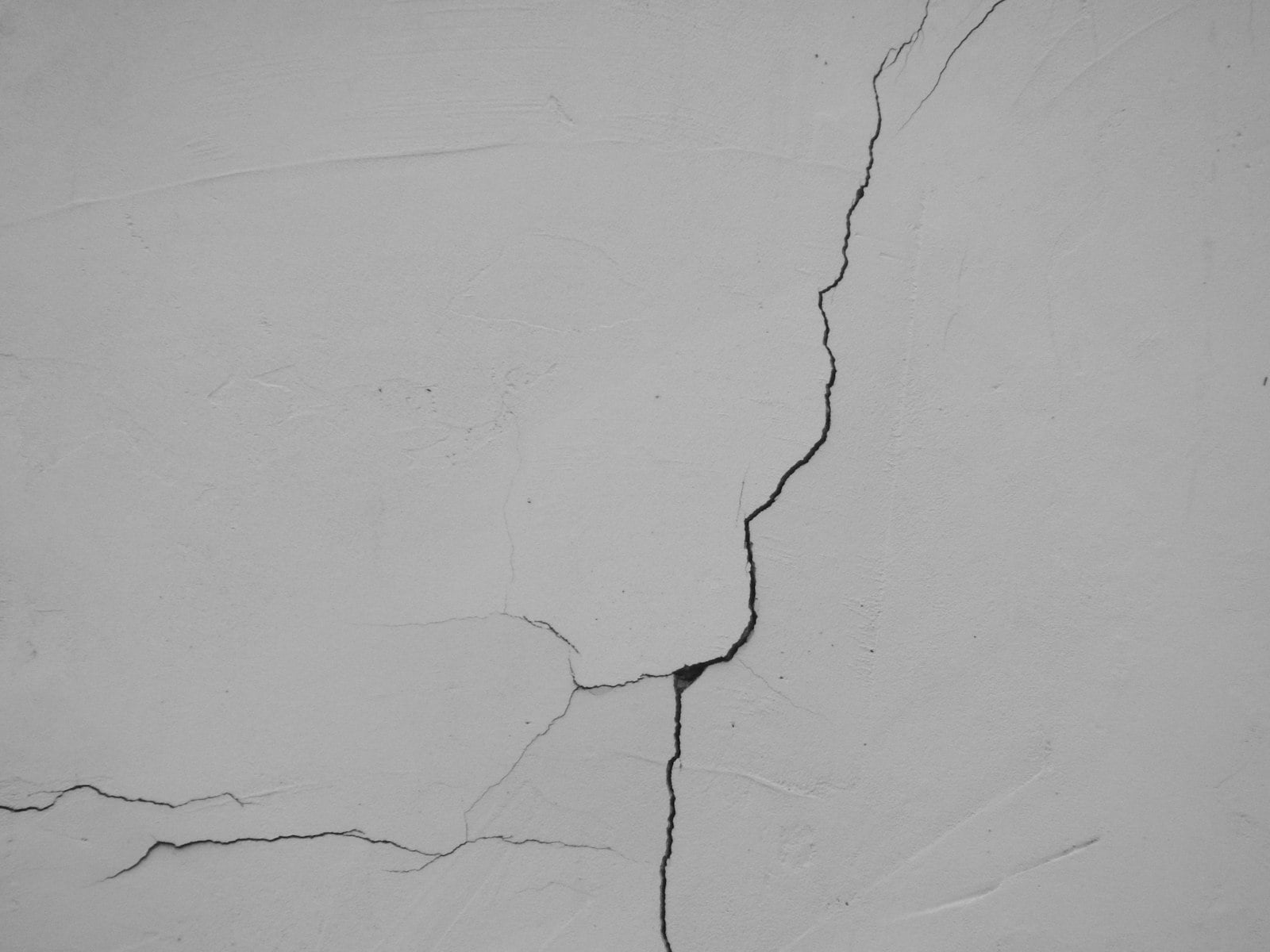
This is the pattern that most often means foundation movement. When a wall racks out of square, the stress concentrates at the corners of the openings, and a crack runs away from that corner at roughly forty-five degrees.
Look at the door or window itself while you are there. If the frame is visibly out of square, if the door has been planed to fit, or if there is a wedge-shaped gap at the top of the frame, the wall has moved rather than just cracked.
Stair-Step Cracks in Brick
Outside, brick veneer cracks along the mortar joints, so movement produces a staircase pattern climbing the wall. A stair-step crack that is wider at the top usually means that part of the wall has dropped or rotated away from the house.
Check the same wall from the end. Brick that is leaning out, a gap at the corner where two walls meet, or a lintel that has dropped over a window are all more significant than the crack line itself.
Horizontal Cracks and Floor Cracks
A long horizontal crack in a masonry or block wall is different from the others and deserves a prompt look, because it can indicate lateral pressure rather than settlement. It is much less common in slab-on-grade housing than in regions with basements, but it does appear in retaining walls and stem walls here.
Cracks in the slab itself, visible in a garage floor or under a lifted carpet, are normal in concrete to a point. Concrete cracks as it cures. What matters is a crack where one side sits higher than the other, which means the two halves have moved independently.
San Antonio Ground and What It Produces
The clay that covers much of the south and east of Bexar County swells and shrinks with the seasons, and the cracking it causes usually appears in late summer and narrows after a wet winter. If your cracks breathe with the weather, that is soil moisture rather than structural failure, and it points toward watering and drainage before piers.
North of the fault line, where limestone sits close to the surface, the pattern is different. A house partly on rock and partly on fill tends to crack along one line, hard, without much seasonal change. Foundation repair in Stone Oak covers what that looks like on the hillside subdivisions up there.
Neither pattern is a diagnosis on its own. It is context that makes the elevation readings easier to interpret.
How to Track a Crack Properly
Photograph it with something for scale in the frame, note the date, and take the same photo from the same spot in three months. Mark the end of the crack with a pencil line so you can see if it has grown. That simple record is worth more than any single opinion about whether it looks bad.
Do not fill it in the meantime if you want the record to be useful. Filler removes the evidence, and a filled crack that reopens just tells you what you already suspected several months later.
Arrange an Inspection
If the cracks are diagonal, widening, or stepping up the brickwork, get the floor measured. A foundation inspection puts numbers on what the cracks are hinting at. From there, slab repair or drainage correction may be the answer, and the pier comparison covers what happens if underpinning is recommended. Request a visit and describe what you have photographed.